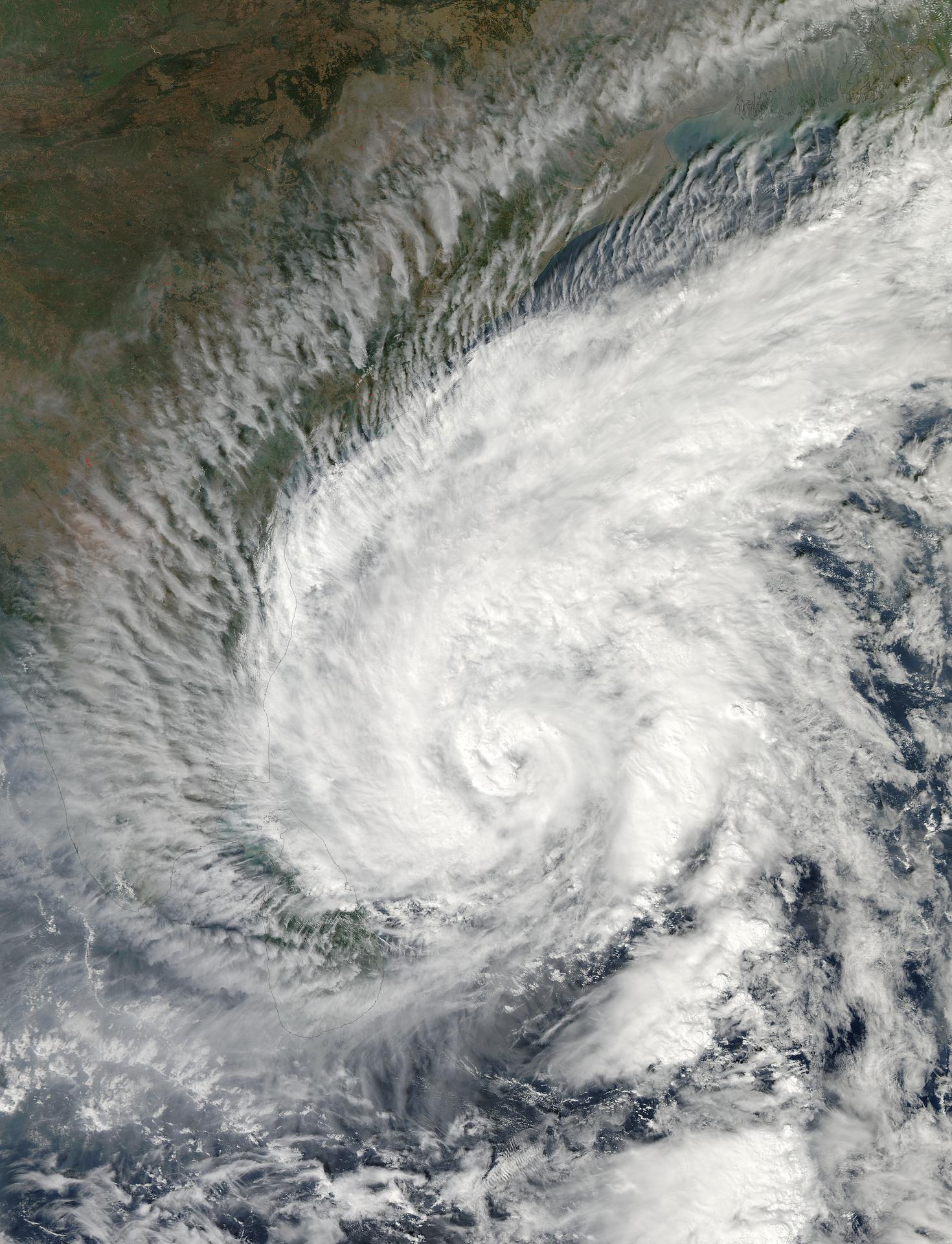
Cyclone Watch: tracking storms over the Bay of Bengal
How satellite observations, warm sea-surface temperatures and official bulletins help coastal communities prepare before landfall.
View in contents
The Climate Union Review · Volume 1 · Issue 1
A research-led environmental publication exploring the changing planet through reporting, accessible science, biodiversity knowledge, climate diplomacy and practical solutions.
Photo: Sundarbans from the ISS · NASA (iss070e005997)
The Climate Union
Review
Climate. Nature. Our future.
Vol. 1 · Issue 1 · Oct–Nov 2026
Inaugural Special Edition · Volume 1 · Issue 1
A 40-page inaugural edition covering the world this month, tropical cyclones, district flood and drought risk, international climate institutions, biodiversity and student writing. Releasing 30 December 2026.
Table of contents · 40 pages
All ten sections of Volume 1, Issue 1 (October–November 2026 · Inaugural Special Edition), from global observations to student writing.
A concise digest of global environmental observations and climate developments.
How tropical cyclones form, intensify and are monitored across the Bay of Bengal and Arabian Sea.
Understanding hazard, exposure and vulnerability across India’s river basins and districts.
How international climate negotiations, treaties and scientific assessments operate.
Terrestrial, freshwater and marine ecosystems responding to shifting temperatures and rainfall.
Seasonal observations, scientific milestones and key environmental dates.
Practical adaptation measures, clean energy transitions and community resilience.
Student essays, campus perspectives and youth inquiries into local climate questions.
Core climate science concepts, data reading guides and foundational terminology.
Closing editorial note and publication colophon.
Inaugural feature desks
Long-form reporting and accessible science from Volume 1, Issue 1, prepared by The Climate Union editorial team.
How satellite observations, warm sea-surface temperatures and official bulletins help coastal communities prepare before landfall.
View in contents
Why climate risk depends on hazard, exposure and vulnerability — and why some Indian districts face both high flood and high drought risk.
View in contentsHow mangroves, mountain forests, wetlands and species across India respond to shifting seasons and habitat pressures.
View in contentsDigital reading room · Volume 1 · Issue 1
The Climate Union Review · October–November 2026 · Inaugural Special Edition · 40 pages.
FORTHCOMING INAUGURAL ISSUE · 40 PAGES
The digital edition opens here on 30 December 2026.
Publication notice: The Climate Union Review, Volume 1 · Issue 1 (Inaugural Special Edition, October–November 2026), is scheduled for release on 30 December 2026 after final editorial verification.
Write for the Review · Young Minds & contributors
Our Young Minds and reporting desks welcome student essays, local environmental observations and evidence-led explainers from schools, colleges and universities across India. Every submission is reviewed for factual accuracy and clear sourcing.